
 By Brian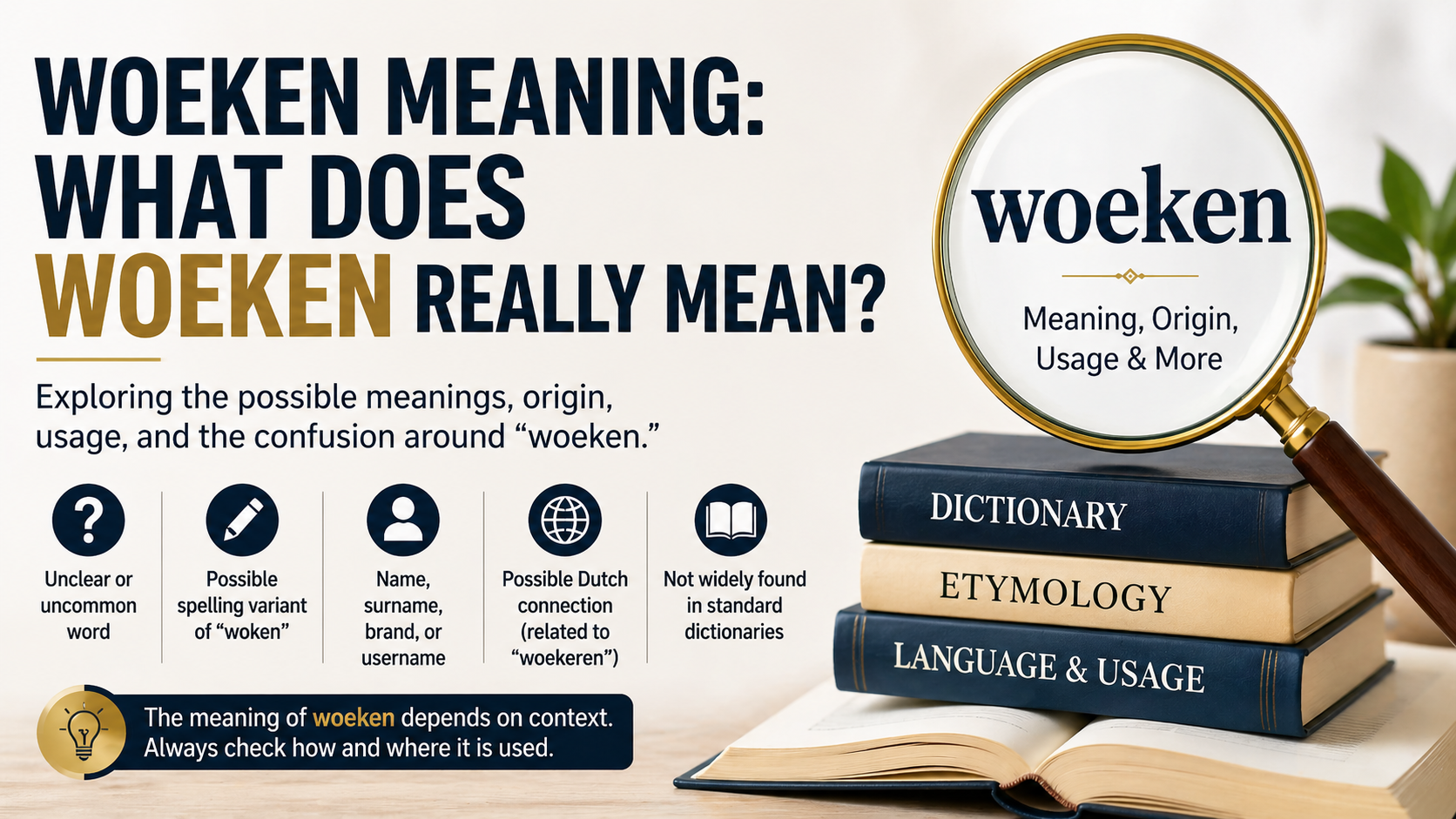
Introduction Why “Woeken” Confuses Searchers
The word woeken can be confusing because it does not have one simple, widely accepted meaning in English. Many people search for it after seeing it in a username, brand name, article title, domain name, social media post, or search suggestion. At first glance, it looks like a real word, but its meaning depends heavily on context.
The confusion also comes from spelling. Woeken looks very close to woken, a recognized English word. It also looks connected to Dutch or European word forms, especially the Dutch verb woekeren. Because of these overlaps, readers may wonder whether woeken is a dictionary word, a typo, a surname, a brand, or a modern internet term.
The safest answer is this: woeken is an uncommon and context-dependent term. It should not be treated as a confirmed English word with a fixed definition unless the source clearly explains how it is being used.
What Does Woeken Mean?
In simple terms, woeken does not have one confirmed standard meaning in English. It may be interpreted in several ways depending on where it appears.
Common Interpretations of Woeken
The most likely interpretations include:
Woeken as an unclear or uncommon word:
Some searchers may encounter woeken online and assume it has a hidden meaning. In many cases, it may simply be a rare, invented, or unexplained term.
Woeken as a spelling variant or typo of “woken”:
Because the letters are similar, some people may type woeken when they mean woken.
Woeken as a name or surname:
Woeken may appear as a family name or personal identifier in historical or genealogical records. For example, FamilySearch search results show “Woeken” appearing in a census-related name record, which supports the idea that it can occur as a name rather than a common word.
Woeken as a brand, username, or handle:
Modern brands and online profiles often use unusual spellings to create memorable names. In that case, woeken may not need a dictionary meaning at all.
Woeken as a word connected to Dutch roots:
There may be a possible connection to Dutch-language forms, especially woekeren, but this should be described carefully as a possible linguistic link, not a proven English definition.
Is Woeken a Real Word?
From a lexicography point of view, a “real word” can mean different things. A word may be real because people use it, but it may not be recognized as a standard dictionary entry. That is where woeken fits best.
At present, woeken should not be presented as a common English dictionary word. Standard English dictionary evidence more clearly supports woken, not woeken. Merriam-Webster defines woken as the past participle of wake.
That does not mean woeken is meaningless. It means writers should avoid overstating the claim. A careful article should say that woeken is uncommon, contextual, and not widely established in English dictionaries.
Dictionary Usage and Lexicography
Lexicography is the study and practice of making dictionaries. Dictionary editors usually include a word when there is enough evidence that people use it consistently across real-world sources.
For woeken, the evidence is mixed. It appears online in different contexts, but those contexts do not always agree. Some pages treat it as a trend. Others treat it as a name, typo, or invented term. Because the usage is not stable, it is better to explain the possible meanings instead of giving one fixed definition.
Possible Origin of Woeken
One possible origin of woeken is a connection to Dutch or related European language forms. This is speculation, but it is reasonable to discuss because woeken visually resembles Dutch words beginning with woeker-.
A useful comparison is the Dutch verb woekeren. Dutch dictionary source Woorden.org defines woekeren with meanings such as continuing to grow at the expense of something else, making the most of something, or charging excessive interest.
In simple English, woekeren can suggest ideas like to proliferate, to spread excessively, to grow wildly, or to exaggerate/exploit depending on context. This does not prove that woeken has the same meaning. It only shows why some readers may connect woeken with Dutch-language roots.
For etymology research, the Netherlands’ KB page describes Etymologiebank.nl as a database of Dutch etymological and dialect resources with more than 300,000 entries. The official Dutch spelling resource Woordenlijst.org is maintained by the Instituut voor de Nederlandse Taal and the Taalunie, which makes it useful for checking standard Dutch spellings and forms.
Important Note on Origin
It would be inaccurate to claim that woeken definitely comes from Dutch unless a reliable source proves that exact form and meaning. The more accurate wording is:
Woeken may be associated with Dutch-looking word forms, especially woekeren, but its modern meaning depends on context.
Woeken vs. Woken
One of the biggest reasons people search for woeken is that it looks like woken.
Woken is a recognized English word. It is the past participle of wake. For example:
- “I had just woken up.”
- “She was woken by the alarm.”
- “They had woken early for the trip.”
Merriam-Webster confirms this basic definition of woken as the past participle of wake.
Woeken, however, is different. It is not the normal English spelling for the past participle of wake. So, if someone writes “I have woeken up,” that is most likely a misspelling of “I have woken up.”
Simple Difference
Woken = standard English word related to waking up.
Woeken = uncommon term, possible name, brand, typo, or Dutch-looking form.
This distinction is important for readers, writers, and SEO content. If your article is about the keyword woeken, explain the difference clearly so users do not confuse it with the established English word woken.
Woeken as Name, Brand, or Username
Another practical explanation is that woeken may be used as a name, brand, or online handle. This is common on the internet. People often choose short, unusual words because they are easier to remember and more likely to be available as usernames or domain names.
For example, woeken might appear as:
- A social media username
- A gaming handle
- A surname in a record
- A startup or product name
- A blog, website, or domain name
- A fictional word in a story or game
In these cases, the meaning is not always linguistic. A brand name can be chosen for sound, style, uniqueness, or availability. A username may have personal meaning known only to the owner.
This is why context matters.
Why People Search for Woeken
People search for woeken for several reasons.
First, they may see the word online and want a quick definition. Because the word is unfamiliar, it creates curiosity.
Second, they may be checking whether it is a typo. Since woeken looks close to woken, many searchers want to know whether they are using the correct spelling.
Third, they may be researching a name. If woeken appears in genealogy, records, or family history research, users may search for its origin or surname meaning.
Fourth, they may be checking a brand or username. Unusual names often lead people to search engines, especially when the name does not clearly explain itself.
Finally, some searchers may be looking for etymology. The Dutch-looking structure of woeken makes people wonder whether it has roots in Dutch or another European language.
How to Understand Woeken in Context
The best way to understand woeken is to look at how it is used. Context usually gives the strongest clue.
Sample Sentences
- “I have just woeken up.”
This is probably a misspelling of woken. - “Woeken posted a new update.”
Here, Woeken is probably a username or display name. - “The Woeken project launches soon.”
In this sentence, Woeken may be a brand, product, or project name. - “The word woeken may relate to Dutch woekeren.”
Here, the writer is discussing a possible etymology or language connection. - “Searchers are asking what woeken means.”
In this case, woeken is being discussed as a keyword or unfamiliar term.
A Simple Context Checklist
Ask these questions:
Is it used in a sentence about waking up?
Then it is probably meant to be woken.
Is it capitalized as “Woeken”?
Then it may be a name, surname, brand, or handle.
Is it discussed with Dutch words?
Then the writer may be connecting it to woekeren or a related form.
Is there no clear explanation?
Then treat it as an unclear or invented term until more context is available.
Final Thoughts
The meaning of woeken is not fixed in standard English. It is best understood as an uncommon, context-based term that may be a typo, a name, a brand, a username, or a word with possible Dutch-language associations.
The strongest confirmed contrast is with woken, which is a standard English word meaning the past participle of wake. The strongest Dutch-related comparison is woekeren, a Dutch verb connected with ideas such as growing, spreading, using something intensely, or exploiting.
So, what does woeken really mean? The honest answer is: it depends on context. Before assigning a meaning, check where the word appears, whether it is capitalized, whether it may be a typo, and whether the source explains it clearly.
FAQs
- What does woeken mean?
Woeken does not have one widely accepted English meaning. It may be a typo, name, brand, username, or Dutch-related form. - Is woeken an English dictionary word?
It is not widely established as a standard English dictionary word. It is better described as uncommon and context-dependent. - Is woeken the same as woken?
No. Woken is the correct English past participle of wake. Woeken may be a misspelling or separate term. - Does woeken come from Dutch?
Possibly, but this should be treated as speculation. It resembles Dutch forms such as woekeren, but that does not prove the same meaning. - Can Woeken be a surname or brand name?
Yes. Woeken can appear as a name-like term, surname, online handle, or brand-style word depending on context.
If you enjoy learning about unusual words and their meanings, explore our other helpful guides on language, lifestyle, and online terms.